Geometrically constrained main group elements
We aim to design tridentate pincer ligands which feature redox activity and structural rigidity to enable the synthesis of T-shaped main group elements compounds.
The molecular distortion towards such geometries unlocks new reaction pathways, e.g. ambiphilic small molecule activation reactions. These species show interesting chemical properties and show high promise in the field of cooperative catalysis, such as hydrogenation, hydroelementation and dehydrogenation catalysis. Furthermore, they display unusual photochemical properties that allow for light induced redox processes akin to established transition metal chemistry.
See our recent publications on T-shaped phosphorus, antimony and bismuth trisamides, and our review for further details.
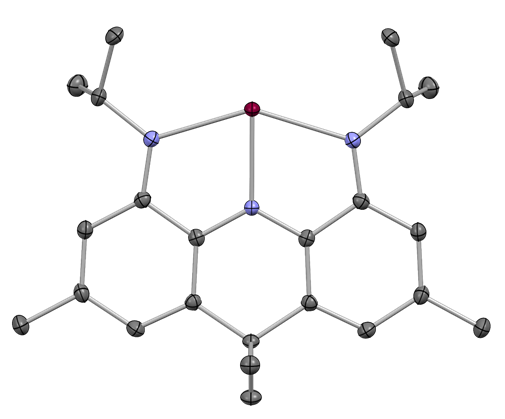
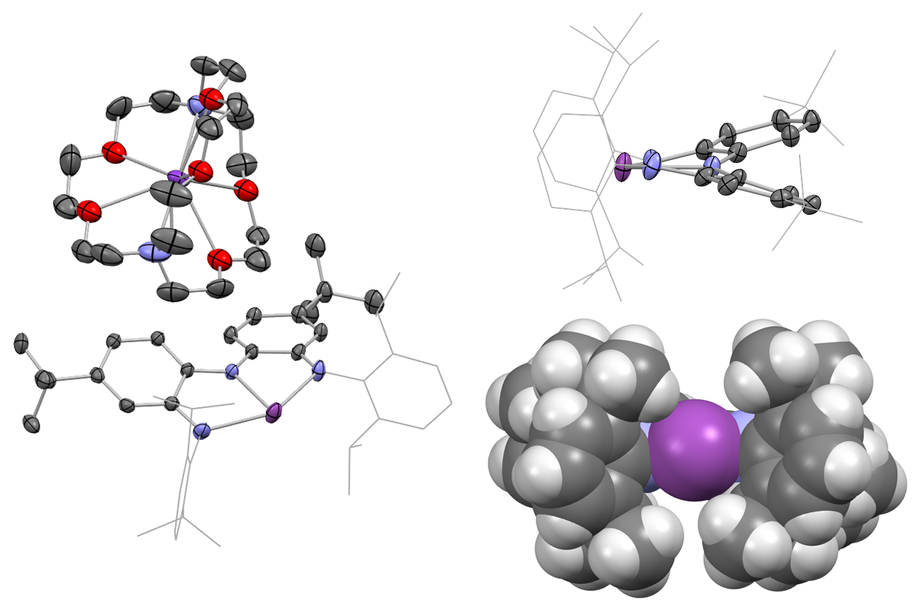
This exotic molecular structure also enables the synthesis of previously inaccessible structural motifs, as recently demonstrated by the preparation of the first Bi(II) radical anion.